 madein háló
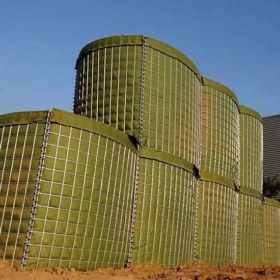
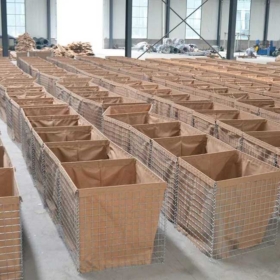
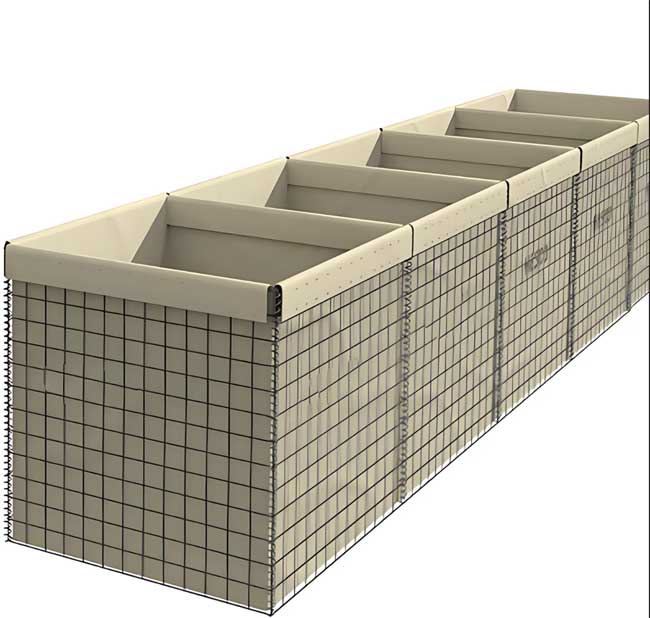
Product Structure & Műszaki előírások
Core Components
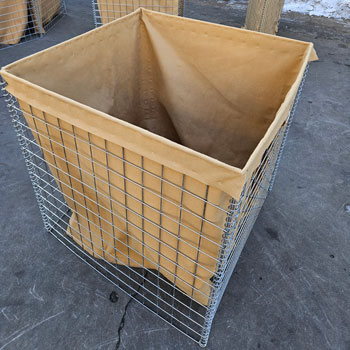
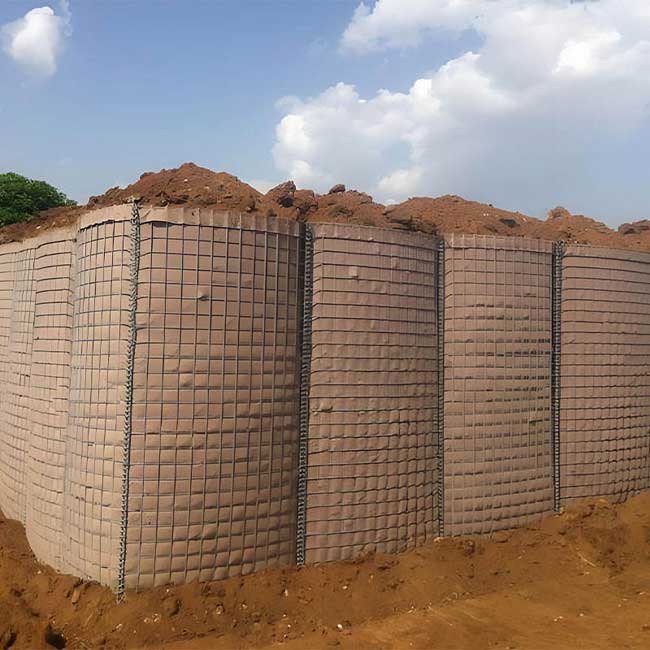
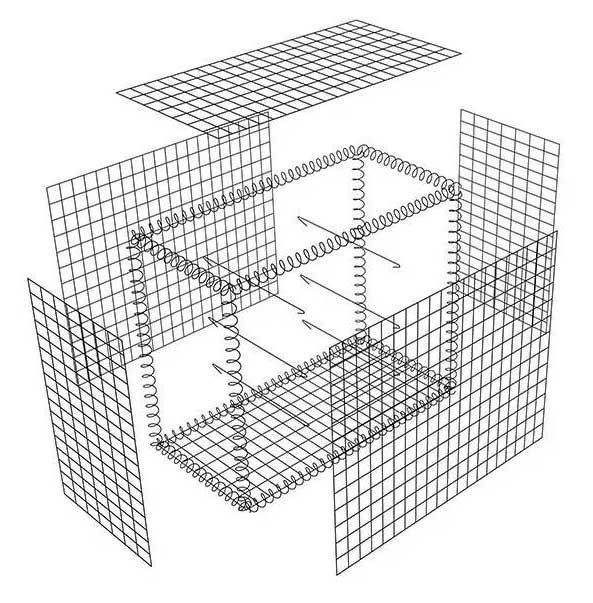
The blast containment cage is comprised of three key elements:
-
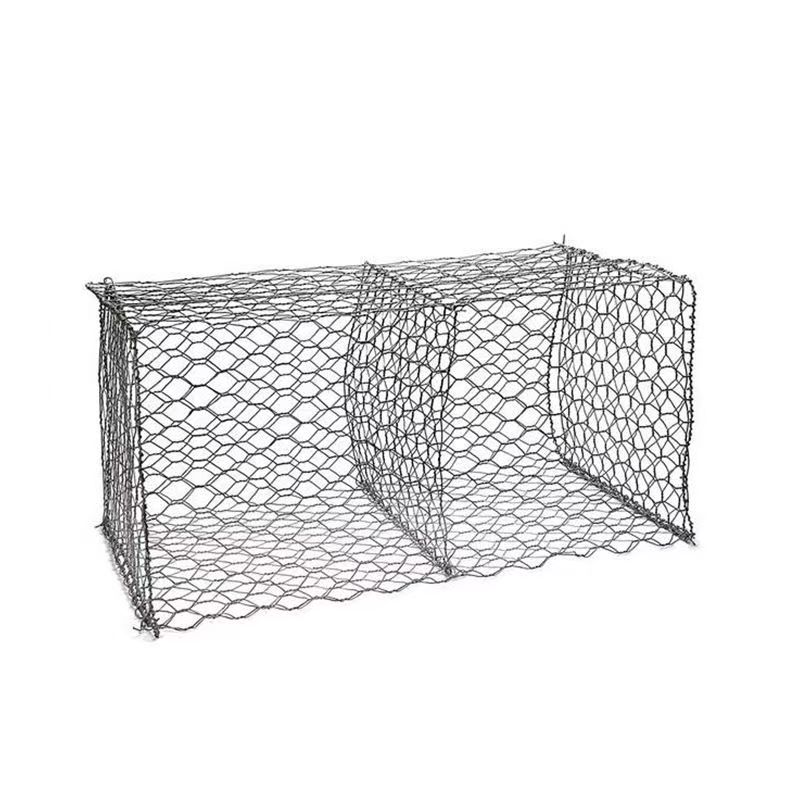
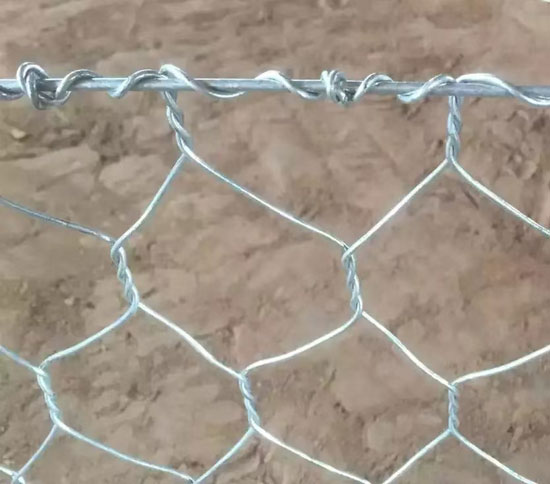
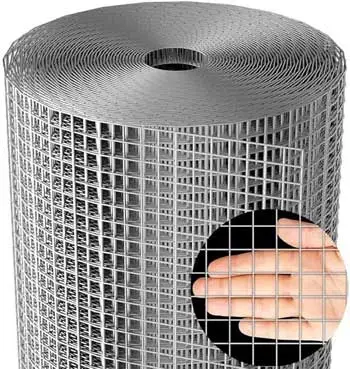
Steel Wire Mesh Cage: Manufactured from low-carbon steel (Q195/Q235) or zinc-aluminum alloy (Galvan) wire, featuring welded joints with a bond strength exceeding 70% of the parent wire’s tensile capacity. Standard wire diameter is 4mm, with mesh openings typically measuring 76.2 × 76.2mm. The mesh offers superior impact resistance, tensile strength, and corrosion resistance.
-
Heavy-Duty Geotextile Liner: Made from high-grade non-woven polypropylene fabric, with a basis weight ranging from 200 hogy 350 g/m². Its transverse tensile strength exceeds 14 kN/m, and longitudinal strength exceeds 10 kN/m. Select models also feature Class B2 flame-retardant properties for enhanced safety.
-
Interlocking System: Adjacent units are connected using helical steel tie wires or steel pins, enabling rapid, secure assembly into continuous wall sections.
Available Specifications
Blast cages are offered in various standard sizes to suit different operational requirements:
| Model | Magasság (m) | Width (m) | Length (m) |
|---|---|---|---|
| QYM-1 | 1.37 | 1.06 | 10.0 |
| QYM-7 | 2.21 | 2.13 | 27.74 |
| QYM-3 | 1.0 | 1.0 | 10.0 |
| Custom | 1.0 | 1.0 | 5.0 |
Custom dimensions and configurations are available upon request.
Key Advantages
1. Drastically Reduced Deployment Time
Traditional sandbag fortifications are labor-intensive and time-consuming. For a standard wall 9 meters long, 90 cm high, és 90 cm wide:
-
Sandbag method: Requires approximately 1,500 sandbags, 10 personnel, és 7 hours to complete.
-
Blast cage system: Requires only 2 personnel with a front-end loader, and can be completed in under 20 minutes.
With rapid-deployment accessories, setups exceeding 600 meters have been achieved in less than 60 seconds.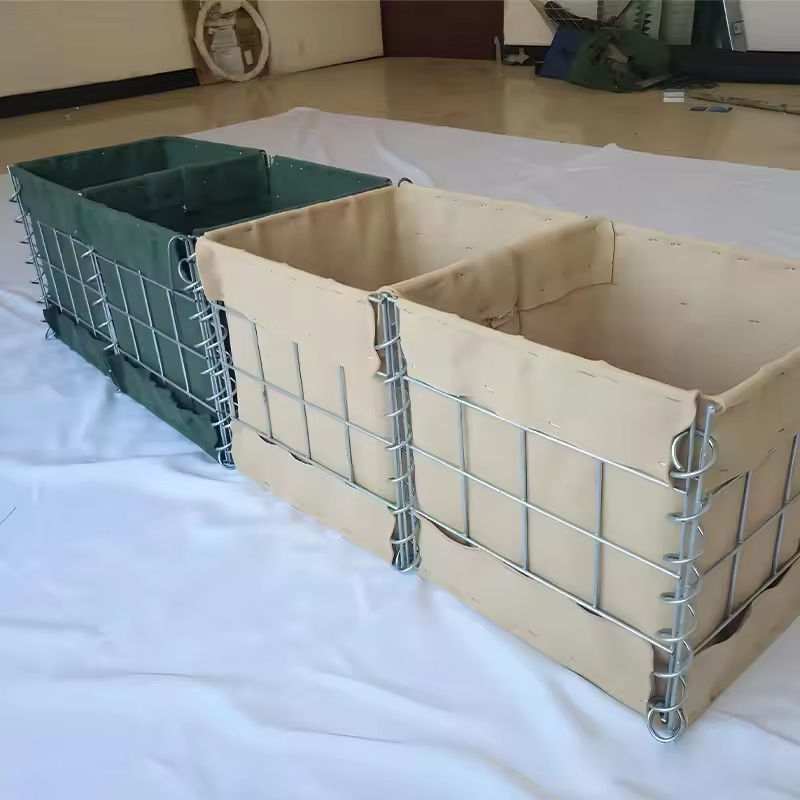
2. Superior Protective Performance
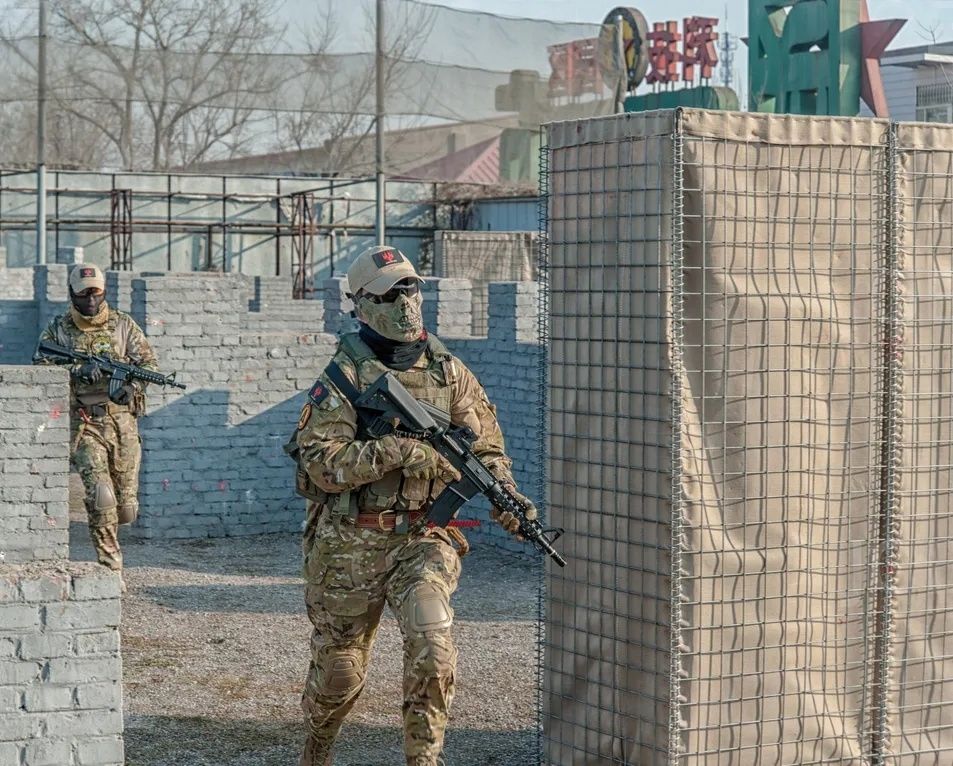
When filled, the blast cage forms a wall with a typical thickness of 600mm, offering protection comparable to reinforced concrete:
-
Effective against rifle-caliber rounds, artillery fragments, and mortar splinters.
-
Withstands a 6.75-ton truck impacting at 80 km/h without structural failure.
-
A double-layer wall can bring a 30-ton truck to a complete stop within 1 second of impact.
3. Compact Transport & Storage
In its collapsed state, the unit folds flat, drastically reducing shipping volume and storage footprint. Each unit remains light enough for manual handling, enabling rapid airlift and ground transport.
4. Reusability & Sustainability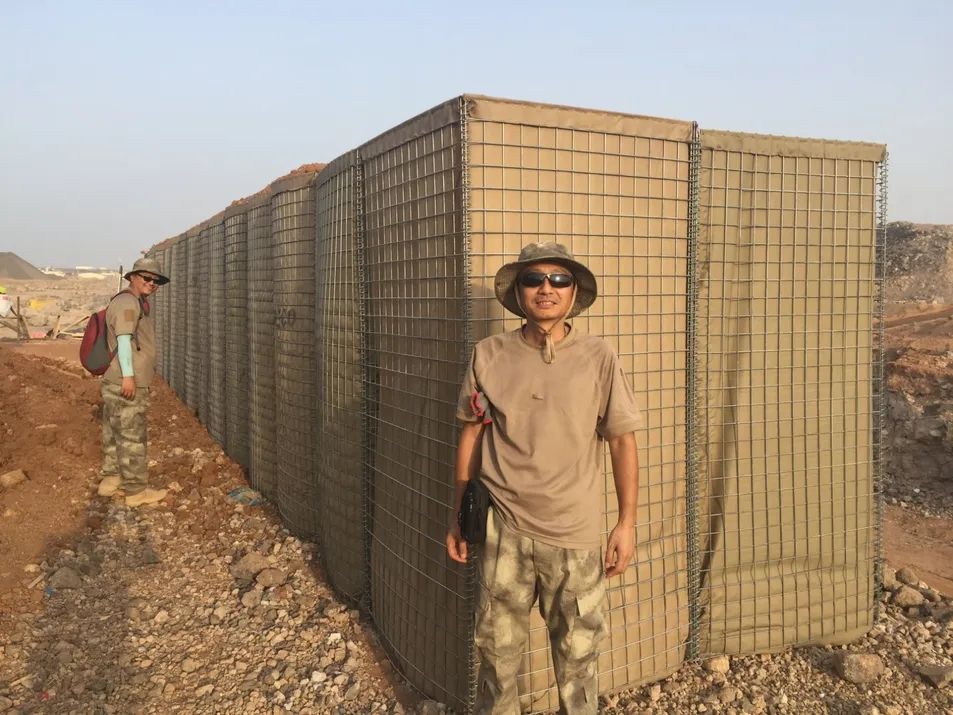
Modern recyclable variants allow for swift dismantling and recovery after exercises or operations, improving retrieval efficiency by up to 80%. This substantially lowers total lifecycle costs and aligns with sustainable defense procurement policies.
Primary Application Scenarios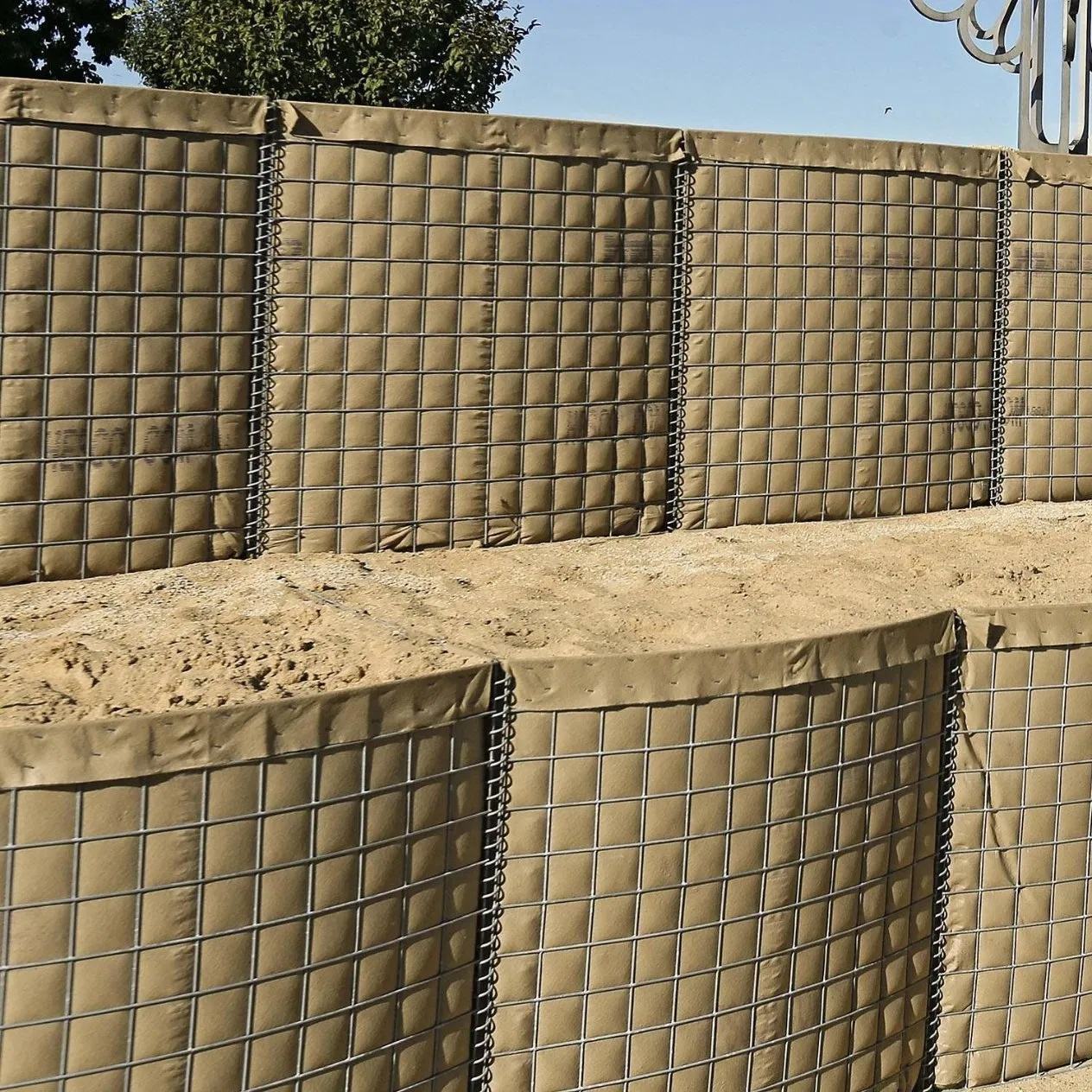
Katonai & Biztonság
-
Base perimeter defense: Establishing secure boundaries for forward operating bases.
-
Guard posts & observation towers: Protecting sentry positions and observation points.
-
Internal compartmentalization: Segregating ammunition depots, fuel storage, and command centers.
-
Tactical field fortifications: Shielding mortar positions, command posts, and medical stations.
During operations in Iraq and Afghanistan, blast cages significantly reduced casualties from indirect fire and vehicle-borne improvised explosive devices (VBIEDs), enhancing troop morale and operational security.
Civilian & Humanitarian Use
-
Flood control: Rapid construction of emergency levees and flood barriers.
-
Civil defense shelters: Replacing traditional sandbags in urban air-raid shelters.
-
Slope stabilization: Erosion control and retaining walls along highways and railways.
-
Environmental restoration: Sand dune fixation and desertification mitigation.
Telepítés & Handling Guide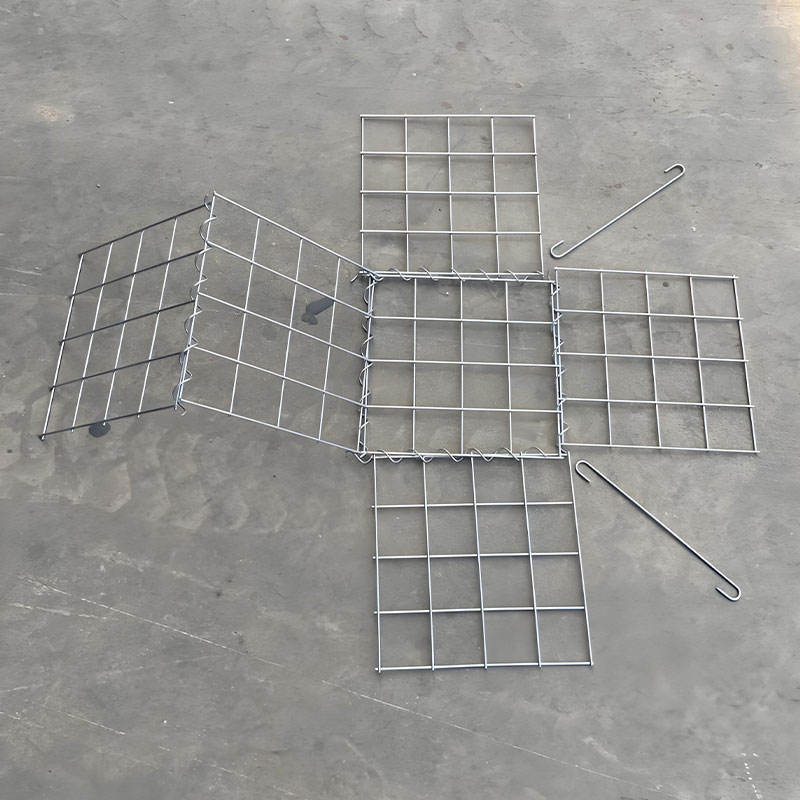
-
Unfold: Lay the collapsed unit flat, then lift and expand it into its upright box shape.
-
Connect: Secure adjacent units using tie wires or steel pins to form a continuous barrier.
-
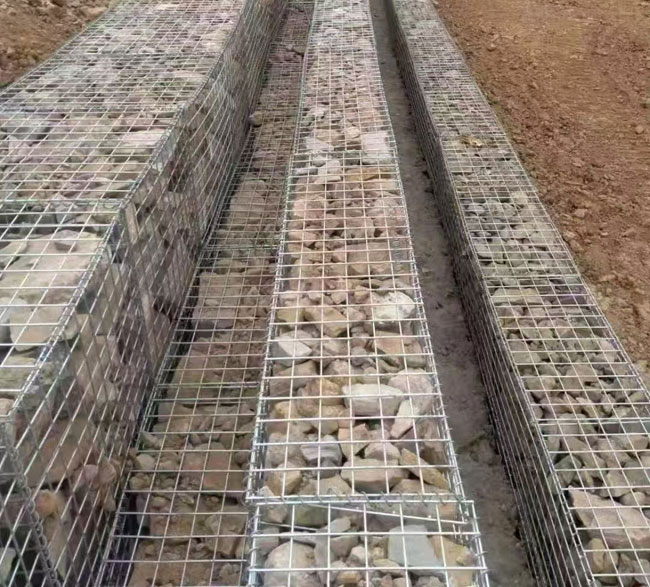
Fill: Use mechanical loaders to fill the lined cage with on-site soil, sand, gravel, or crushed stone.
-
Compact: When required, compact the fill material in layers to maximize density and structural integrity.
-
Stack: For enhanced height and thickness, stack units in a staggered configuration (például, double row on the bottom, single row on top).
Technical Reference Data
| Parameter | Specification |
|---|---|
| Base Material | Low-carbon steel (Q195/Q235) or Galfan (zinc-aluminum) |
| Vezeték átmérője | 3.0mm, 4.0mm, or 5.0mm (customizable) |
| Mesh Aperture | 50–100mm (standard: 76.2 × 76.2mm) |
| Felületkezelés | Electro-galvanized, hot-dip galvanized, or Galfan coated |
| Liner Color Options | Desert sand, military green, gray, or custom camouflage |
| Flame Retardance (opt.) | Class B2 (upon request) |
Következtetés
The Military Blast Containment Cage represents a paradigm shift in force protection and rapid engineering. By combining exceptional deployment speed, battle-proven ballistic resistance, logistical efficiency, and environmental sustainability, it has become an indispensable asset for both defense forces and civilian emergency responders.
Whether securing frontline positions, protecting critical infrastructure, or responding to natural disasters, the blast cage delivers reliable, költséghatékony, and scalable protection. As material science and modular design continue to evolve, its capabilities will only expand—offering even greater safety and operational flexibility for the challenges ahead.