 madein mesh

Section 1: Introduction to Copper’s Metallurgical Status
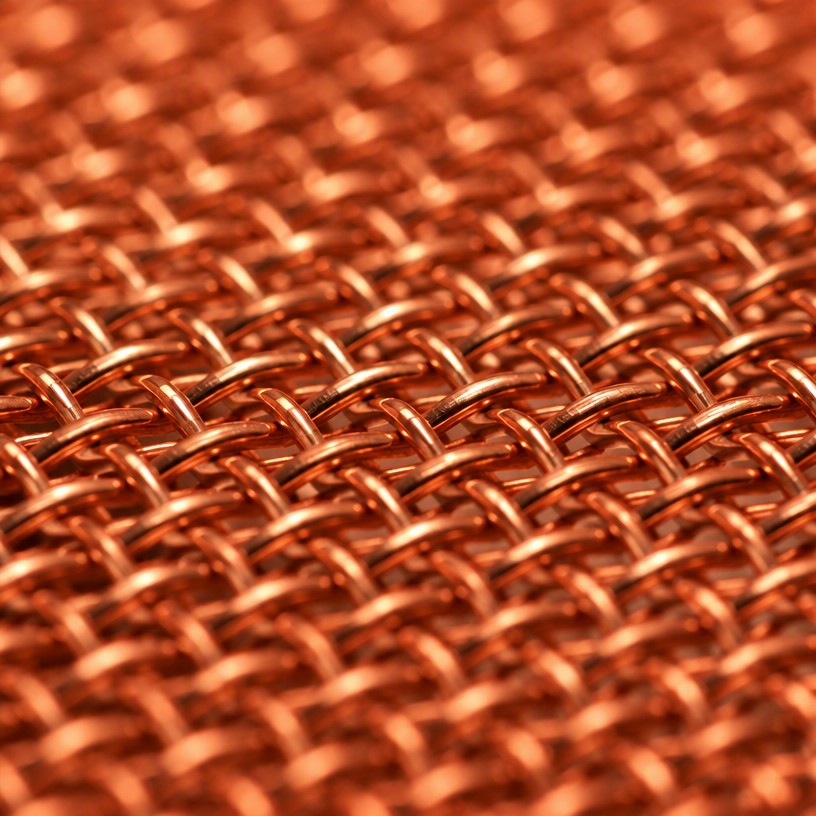
Copper is one of the oldest and most trusted metals in industrial history, revered for its ductility, malleability, and superior conductivity. In the form of wire mesh, copper becomes a high-performance material that bridges the gap between metallurgy and high-tech engineering. Unlike alloys like brass or bronze, pure copper (often referred to as red copper) provides the maximum possible electrical performance. Its unique reddish-orange hue is not just aesthetic; it signifies a material with 99.9% purity, essential for applications where chemical consistency and physical reliability are non-negotiable.
Section 2: The Physics of EMI/RFI Shielding
In our increasingly digital world, Electromagnetic Interference (EMI) and Radio Frequency Interference (RFI) can cause significant malfunctions in sensitive electronic equipment. Copper wire mesh acts as a Faraday cage, an enclosure used to block electromagnetic fields. Due to copper’s exceptional electrical conductivity, it can effectively absorb and reflect incoming electromagnetic waves. This makes it a critical component in the construction of shielded rooms (MRI rooms in hospitals), electronic enclosures, and secure data centers. The efficiency of the shielding is determined by the mesh count; a finer mesh generally provides better shielding for higher-frequency interference.
Section 3: Superior Electrical and Thermal Conductivity
Copper is the standard by which all other conductive materials are measured (defined as 100% IACS – International Annealed Copper Standard). This high conductivity makes copper wire mesh an excellent choice for battery electrodes, heating elements, and electrical grounding systems. Its thermal conductivity is equally impressive, allowing the mesh to act as an efficient heat sink or heat spreader in compact electronic devices and industrial machinery.
Section 4: Laboratory and Medical Grade Filtration
Precision is the hallmark of laboratory and medical environments. Copper wire mesh is used in these sectors for high-grade filtration where chemical reactivity must be carefully managed. Copper also possesses natural antimicrobial properties, which can be advantageous in certain medical or water treatment filtration processes to inhibit the growth of bacteria and fungi on the mesh surface. Its ability to be woven into extremely fine counts (up to 200 mesh and beyond) allows for the capture of microscopic particles with high consistency.
Section 5: Litlhaloso: Mesh Count and Wire Diameter Ratios
Specifying copper wire mesh requires an understanding of the relationship between mesh count and wire diameter. The “Mesh Count” refers to the number of openings per linear inch. As the mesh count increases, the size of the openings (lesoba) decreases. However, the wire diameter also plays a crucial role in determining the “Open Area” percentage. For EMI shielding, a balance must be struck: the mesh must be tight enough to block waves but sometimes open enough to allow for airflow or visibility. Technical data sheets for copper mesh typically list the wire gauge in millimeters or microns, alongside the resulting aperture size, to ensure engineers can select the exact specification for their needs.
Section 6: Durability and Corrosion Resistance in Precision Environments
While copper does develop a patina (a green surface layer of copper carbonate) when exposed to the atmosphere over long periods, this layer actually protects the underlying metal from further corrosion. In controlled precision environments, copper remains exceptionally stable. It is resistant to many organic chemicals and can withstand significant temperature fluctuations without becoming brittle. Its durability, combined with its specialized physical properties, ensures that copper wire mesh remains the “gold standard” for high-stakes technical applications where failure is not an option.