 ṣe apapo
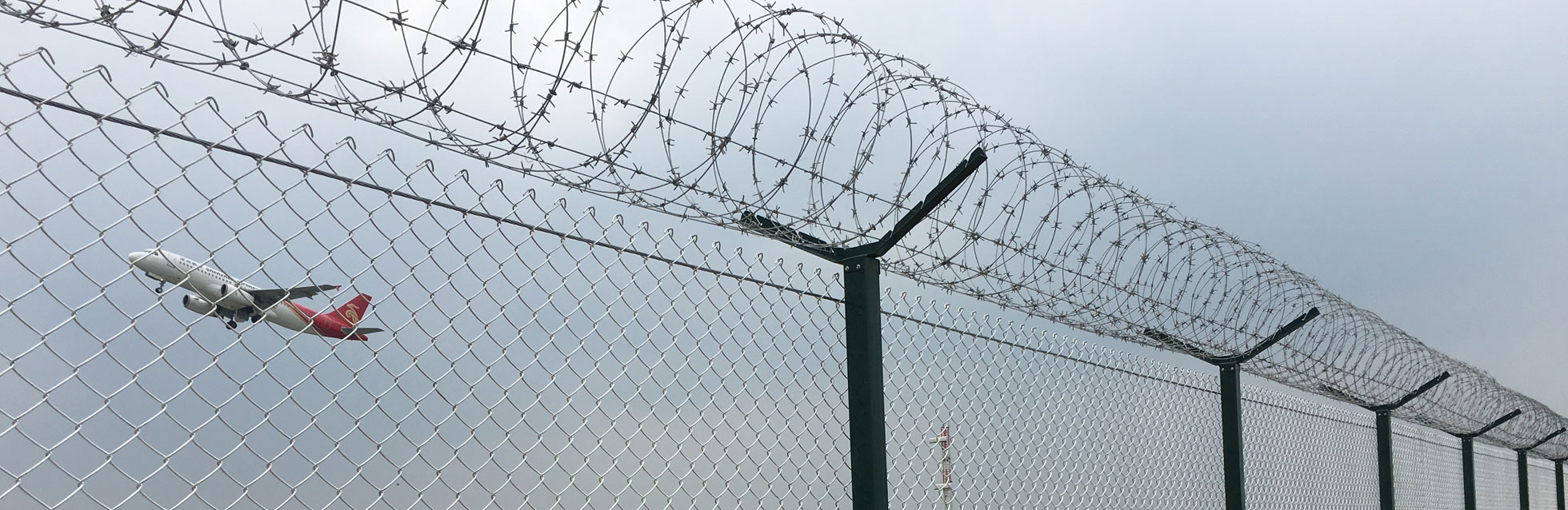
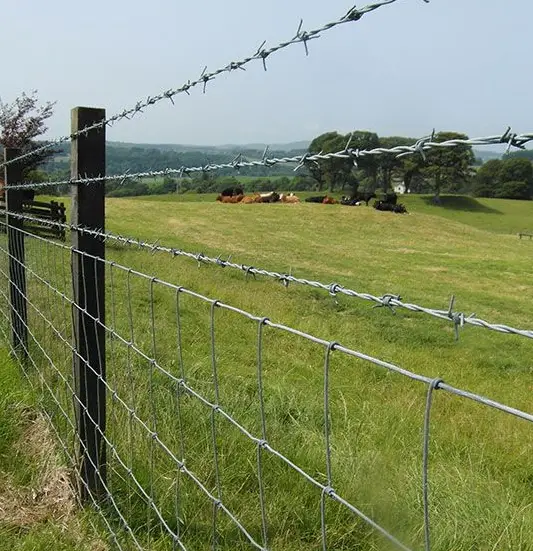
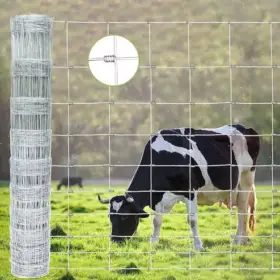
Orukọ ọja: Odi ẹran (tun commonly tọka si bi ẹran-ọsin Waya Mesh, Oko ẹran ọsin odi, tabi Hinge Joint Fence)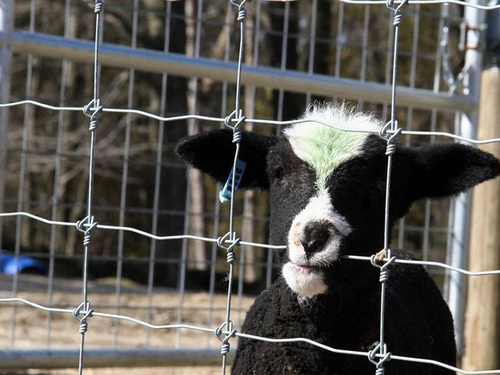
Key Awọn ẹya ara ẹrọ & Awọn anfani:
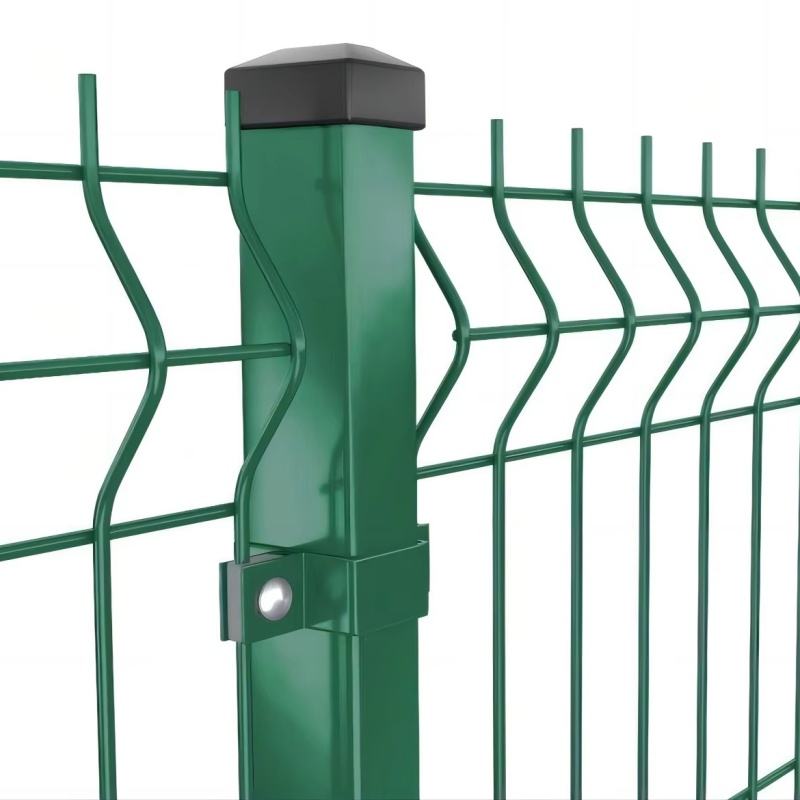
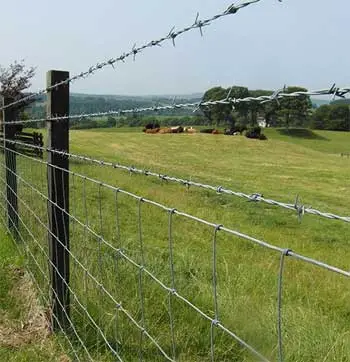
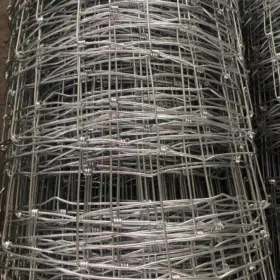
- Superior Strength & Iduroṣinṣin: Ti ṣelọpọ lati agbara-giga, kekere-erogba irin waya. Awọn onirin iduro inaro ni igbagbogbo ni aye sunmọ papọ ati welded tabi hun si awọn onirin ila petele wuwo, ṣiṣẹda a kosemi nronu ti o koju titari ati ipa lati ẹran-ọsin.
- Animal Abo Design: Awọn ẹya ara ẹrọ dan, welded awọn isopọ tabi Pataki ti a še koko (ni hun awọn ẹya) ti o imukuro didasilẹ protrusions, significantly atehinwa ewu ti gige, scratches, tabi entanglement fun eranko.
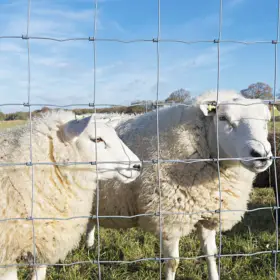
- Iwoye giga & Imudara to munadoko: Ilana apapo ti o ṣii gba awọn ẹranko laaye lati rii idena naa, eyiti o ṣe iranlọwọ fun ikẹkọ wọn lati bọwọ fun aala odi. The tight spacing at the bottom prevents smaller animals from crawling through and calves from getting their heads stuck.
- Fifi sori Rọrun: Typically supplied in rigid, ready-to-install panels of standard heights (f.eks., 48″, 52″, 60″) ati awọn ipari (usually 8ft, 10ft, or 16ft). This panelized system allows for faster, straighter installation compared to roll-out wire, especially over uneven terrain when combined with adjustable fence posts.
- Itọju Kekere & Long Service Life: Available with various protective coatings:
Heavy Galvanization (Zinc Coating): Provides excellent rust resistance for general use.
Polyethylene (PE) or PVC Coating (Green/Black): Adds an extra layer of protection against corrosion, UV rays, and abrasion. The coating is often applied over a galvanized core for maximum durability and a more aesthetic appearance that blends with the landscape.
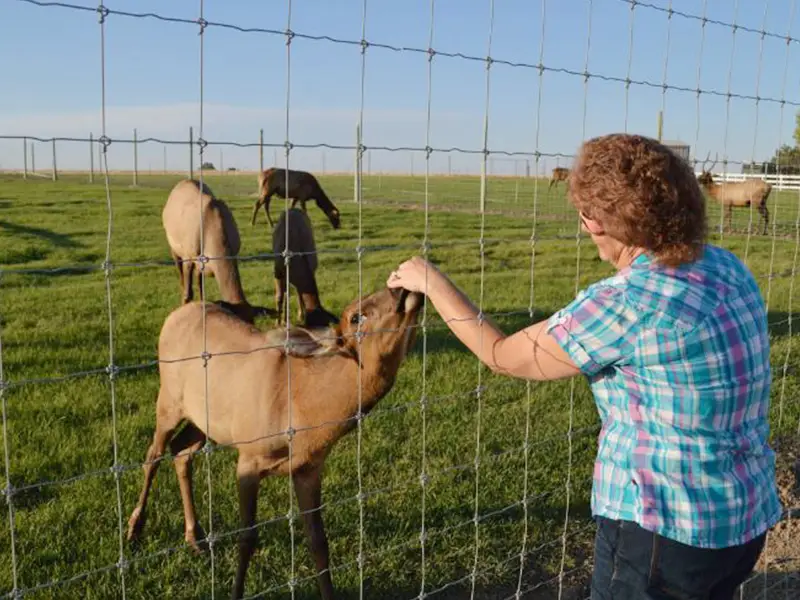
- Iwapọ: Effective for containing not only cattle but also horses, bison, elk, sheep, goats, and other large animals. Also used for perimeter fencing, feedlot divisions, and arena fencing.
Wọpọ pato:
Panel Height: Standard sizes include 48″, 52″, 60″, 72″, and 96″.
Panel Length: Wọpọ 8 ẹsẹ, 10 ẹsẹ, tabi 16 ẹsẹ.
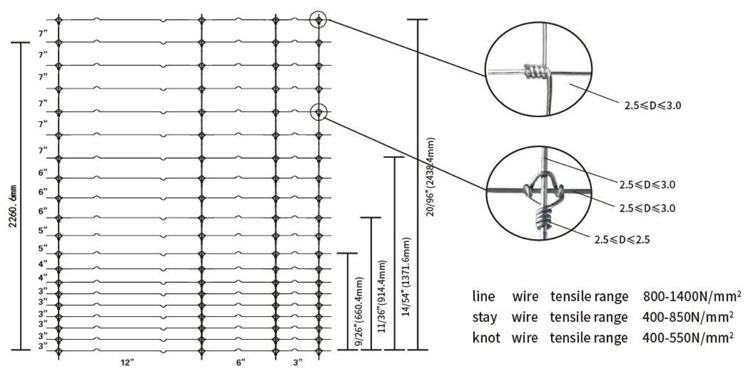
Wire Wire: Horizontal wires are usually heavier (f.eks., 6-8 iwon), while vertical stay wires are slightly lighter (f.eks., 9-11 iwon).
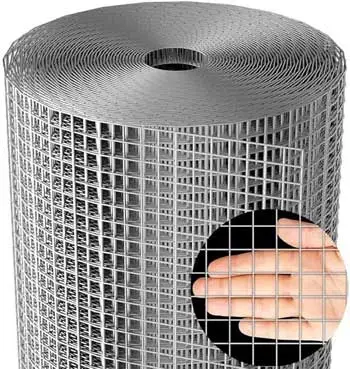
Mesh Spacing: Variable, but often features smaller spacing at the bottom (f.eks., 2″ x 4″) graduating to larger spacing at the top (f.eks., 6″ x 8″) to provide strength where animals are most likely to push.
Awọn ohun elo akọkọ:
Pasture & Grazing Land Perimeter Fencing
Feedlot Pens and Alleyways
Lane Fencing and Corral Systems
Horse Paddocks and Arenas
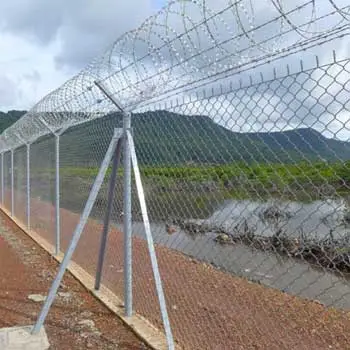
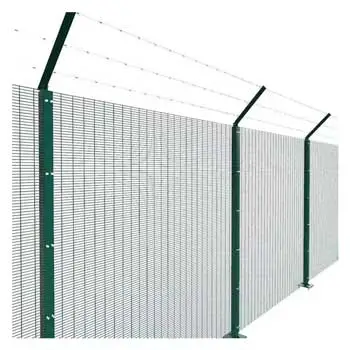
Perimeter Security for Large Properties
Wildlife Enclosures (f.eks., in zoos, game farms)
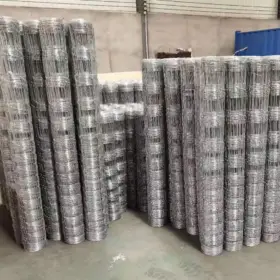
Iṣakojọpọ: Supplied as rigid, flat panels, often bundled and strapped for easy handling and transport.
Cattle Fence is the professional standard for modern livestock management, offering an optimal balance of safety for animals, security for owners, and long-term value through its durable, low-maintenance design.